
Lunar New Year in Vietnam, locally known as Tet, is the most meaningful time of the year. Celebrated according to the Lunar Calendar, it usually falls between late January and mid February.
More than fireworks and festive meals, Tet is shaped by thoughtful customs that reflect how Vietnamese people prepare for new beginnings, care for family, and carry hope into the year ahead.
If you are spending Lunar New Year in Vietnam, understanding these traditions will help you feel more connected to the season and the people around you.
Here are some things you should do during Lunar New Year in Vietnam to experience Tet with intention, respect, and deeper cultural understanding.
Clear The Old, Welcome The New
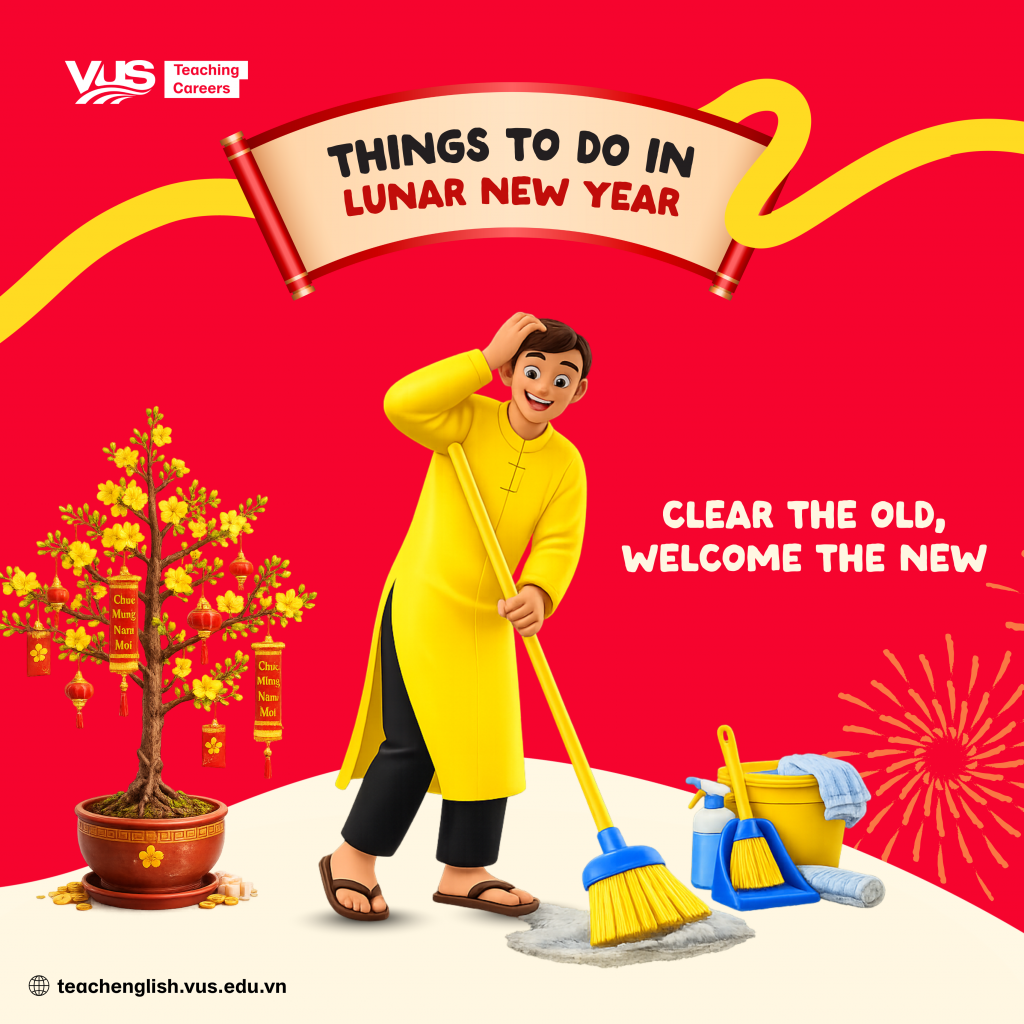
Before Tet arrives, many Vietnamese families start by cleaning and refreshing their homes. It’s a way to let go of dust, clutter, and the not-so-lucky moments of the past year, making space for a brighter new beginning.
Beyond cleaning, decorating matters too. Apricot blossoms, peach blossoms, red couplets, lanterns, and small Tet touches don’t just make the house look festive – they’re believed to invite luck, warmth, and positive energy for the year ahead.
Local reminder:
Clear out broken or unused items, tidy every corner, and prepare household essentials in advance. When everything is ready, Tet feels lighter, smoother, and more joyful from day one.
Tet Flavors That Tell A Story
There’s a Vietnamese saying: “Đói quanh năm, no ba ngày Tết” (Hungry all year, full during Tet).
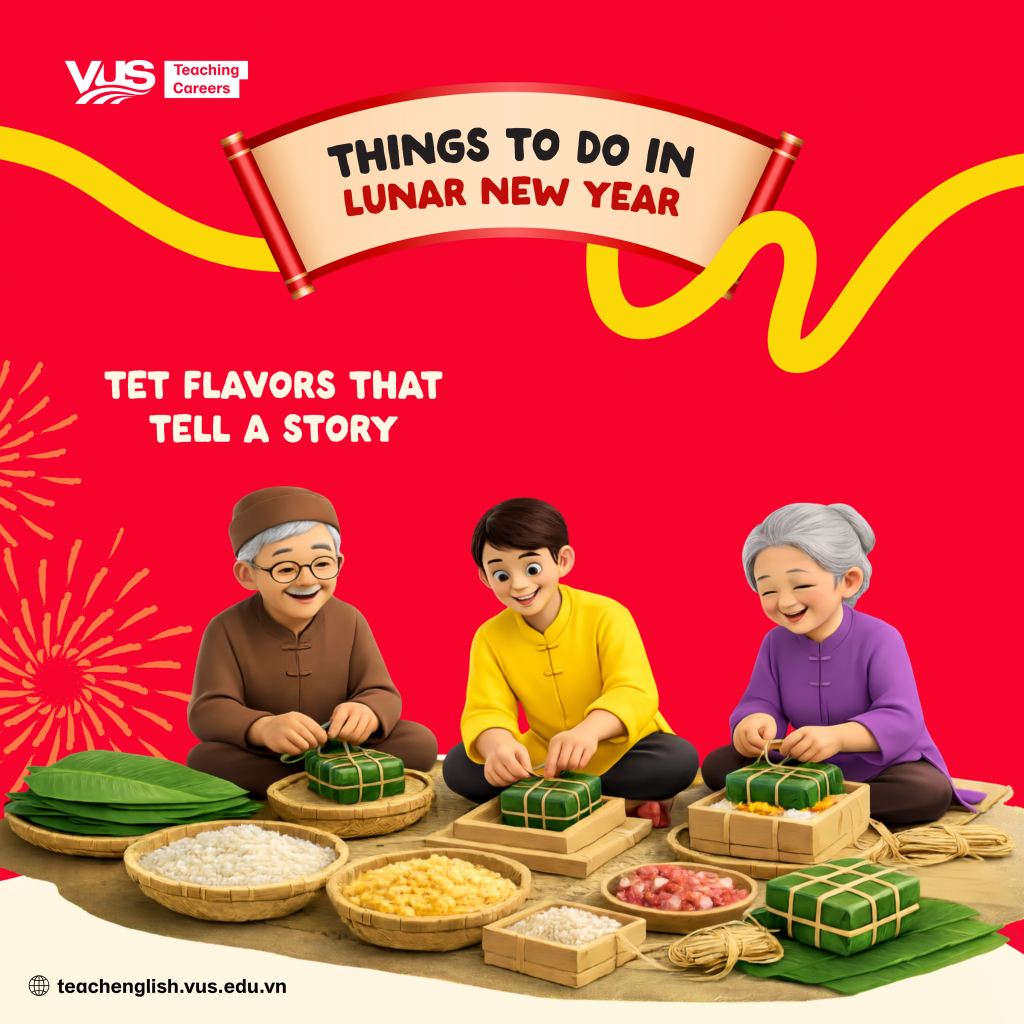
In the past, daily meals were simple, and Tet was the rare time when families gathered to prepare special dishes together. No matter rich or poor, everyone tried their best to have a full Tet table – not just for eating, but for hope.
Traditional Tet dishes carry more than flavor. Banh Chung and banh Tet honor ancestors and agricultural roots. Boiled chicken symbolizes good fortune and fulfilled wishes, while Gio and Cha represent harmony, warmth, and blessings filling the home.
Local reminder:
Tet meals are about togetherness as much as preparation. Plan ahead, cook enough, and enjoy the process – a full table sets the tone for a year of comfort and plenty.
A Quiet Moment Before Tet
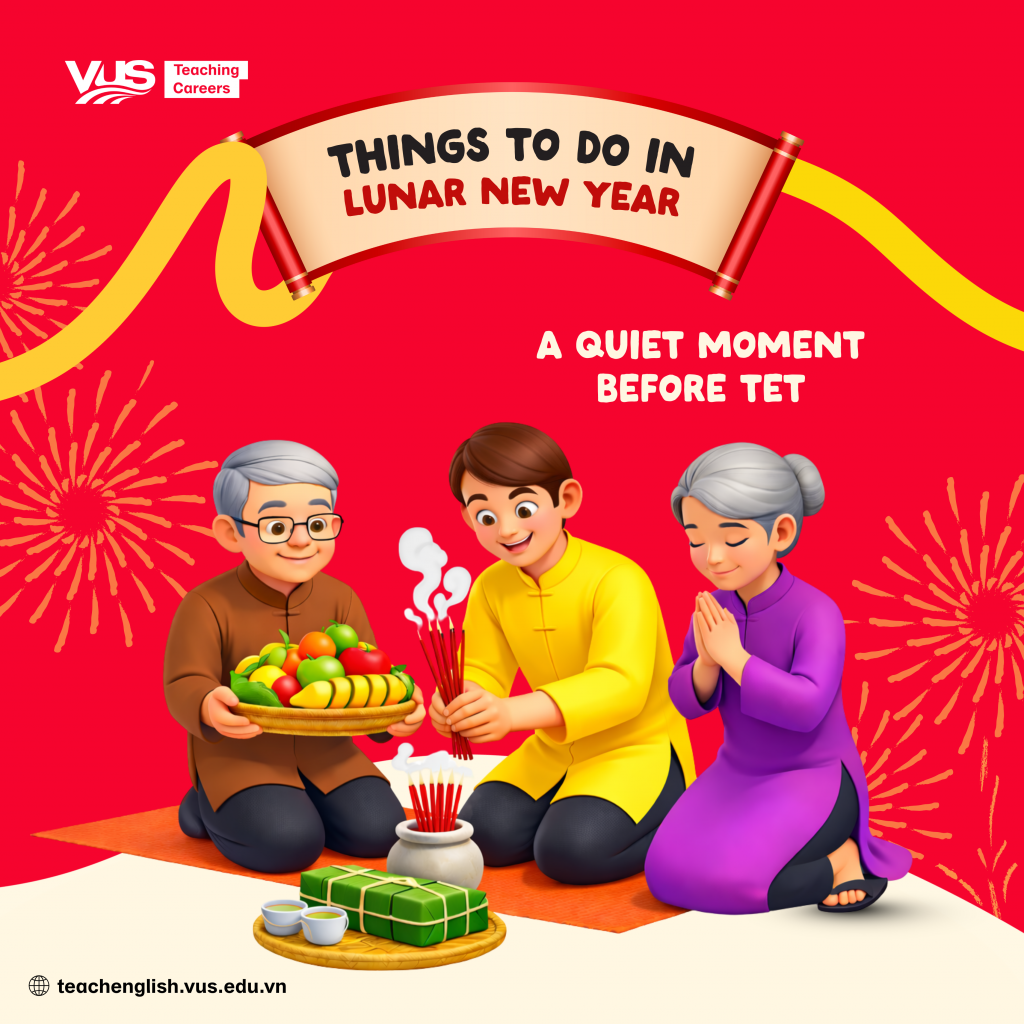
Even if you are not part of the family tradition, you can show respect by observing quietly and asking about the meaning behind the ritual. Before the New Year begins, many Vietnamese families visit ancestral graves in a tradition called Tao Mo. It’s a way to clean, care for, and show gratitude to grandparents and ancestors – inviting them to return home and celebrate Tet together.
More than a ritual, this is a time for family members to gather, remember, and reflect on the past year. It reflects a core Vietnamese belief: knowing where you come from matters. Through this quiet moment, Tet begins with respect, remembrance, and connection.
Local reminder:
Move gently and respectfully when visiting graves. Offer simple incense and flowers, avoid stepping on graves or speaking loudly – sincerity matters more than elaborate offerings.
Tao mo usually takes place from around the 20th day of the lunar month until New Year’s Eve, depending on family tradition.
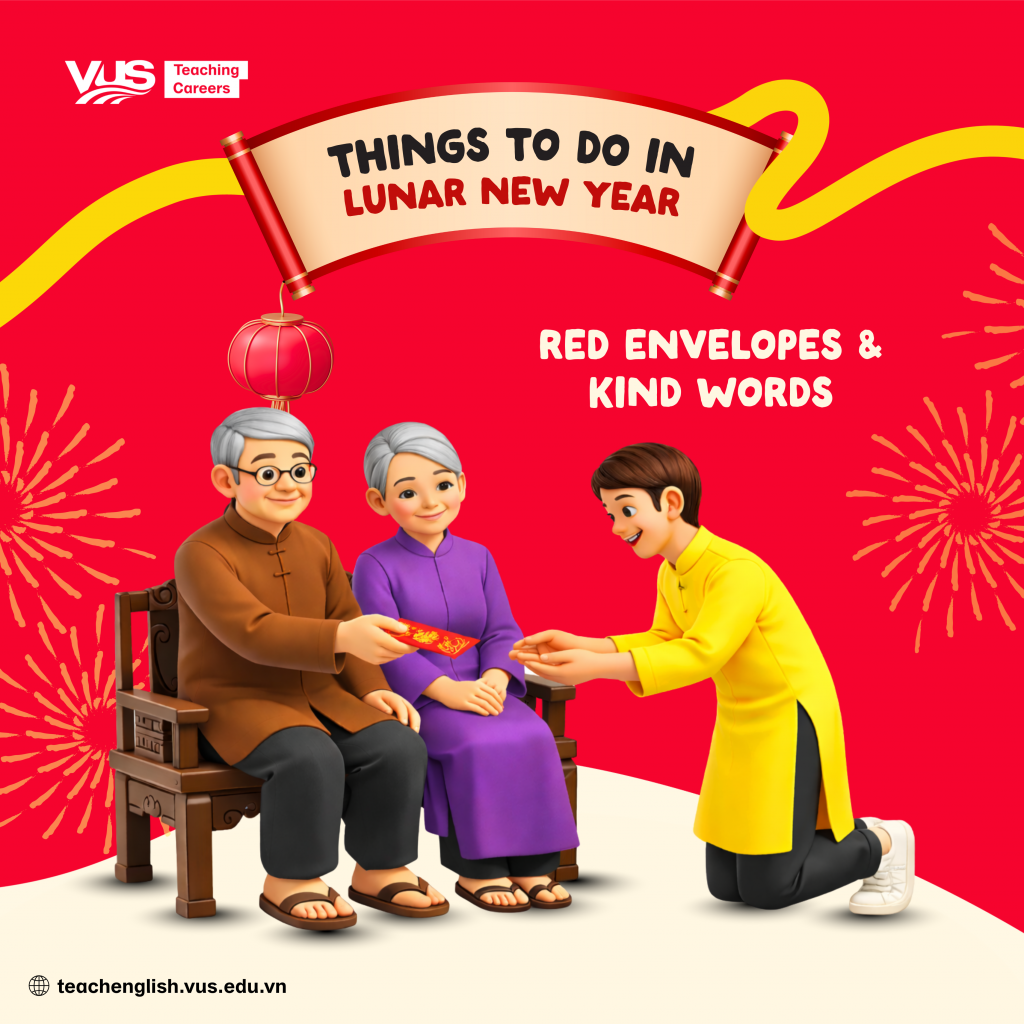
Red Envelopes & Kind Words
One of the most beloved Tet traditions in Vietnam is giving red envelopes, known as li xi. More than money, li xi carries New Year wishes for luck, health, and happiness.
Traditionally, on the morning of the first day of Tet, younger family members greet grandparents and parents with New Year wishes. Elders then give back li xi – a red envelope with a small amount of money inside – as a symbol of love, good fortune, and blessings for the year ahead.
In the past, it was often just a coin inside a red envelope, but the joy it brought symbolized blessings for the year ahead.
Local reminder:
Li xi follows respect and family order. Younger people do not usually give li xi to elders unless they are already married or financially independent. Today, customs are more flexible, but sincere wishes and politeness always matter more than the amount inside the envelope.
Shaped by the lunar calendar, Tet is marked by simple traditions that show how Vietnamese people welcome change, care for family, and begin the year with intention.
If you are spending Lunar New Year in Vietnam for the first time, there is no need to follow every tradition perfectly. These customs are part of Vietnamese culture, and Vietnamese people are generally warm and welcoming toward foreigners who show respect and curiosity. Observing, asking questions, and participating with sincerity is already enough to feel connected during Lunar New Year in Vietnam.
For nearly 30 years of pioneering English education in Vietnam, VUS has built a strong reputation with 68 campuses and more than 2,700 internationally qualified teaching staff nationwide.
VUS proudly affirms its leading position with a double victory at the Vietnam Technology Excellence Awards 2025, and two consecutive years being honored as an Inspirational Brand at APEA, alongside many other prestigious national and international awards.
VUS offers an exciting opportunity for expatriate teachers to grow professionally while discovering the beauty of life and culture in Vietnam. With strong support and international standards, your journey here is more than just teaching – it’s about learning, connecting, and thriving.
- Competitive salary: Rewards that match your talent and contribution.
- Professional growth: Enhance your teaching skills with ongoing training and development.
- Cultural immersion: Experience daily life in Vietnam and build meaningful local connections.
- International-standard environment: Teach with modern facilities, updated resources, and proven methodologies.
- Full integration support: Assistance with administrative paperwork and a dedicated Buddy Program to help you adapt to local culture, especially at provincial campuses.
- Free Vietnamese classes: 100% free for all VUS expat teachers (even during probation), taught by qualified Vietnamese teachers with proven expertise, and built on a tailored curriculum that meets expats’ daily needs.
Start your teaching journey with VUS today!