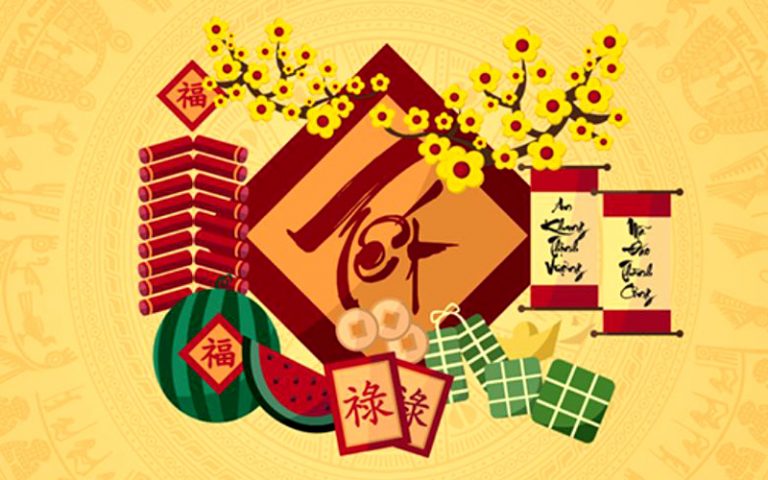
When mentioning the New Year, people often think of the first day of the year based on the regular Gregorian calendar, January 1st. However, for Asian countries, including Vietnam with its Tet celebration, their “New Year” is entirely different, as it begins on the first day of the lunar calendar. These differences result in a distinct contrast between Tet and New Year that was presented in the previous post.
So, what is a lunar calendar, and why is it used in Asian countries?
Let’s go through this post to explore these secrets!
1. A CLOSER LOOK AT MOONLIGHT TIMEKEEPING
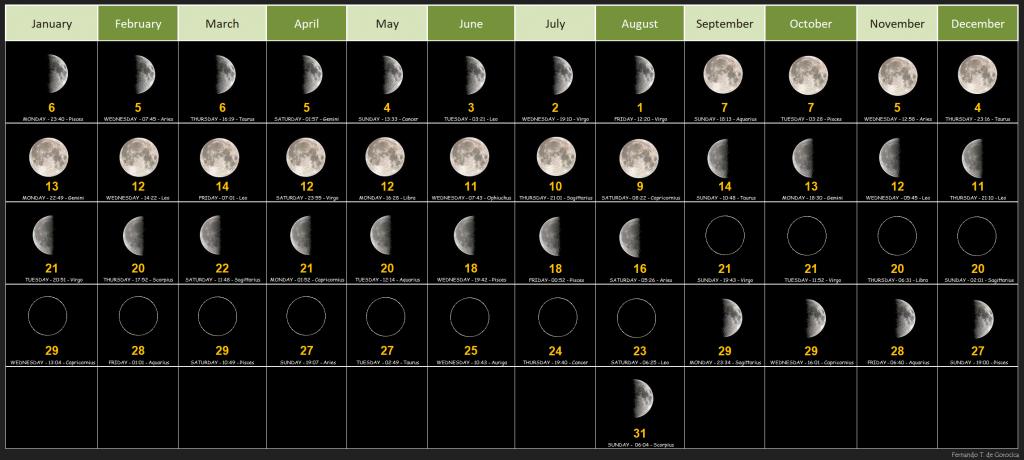
A lunar calendar is a timekeeping system reliant on the monthly cycles of the Moon’s phases, known as synodic months or lunations. Unlike solar calendars that rely on the Earth’s orbit around the Sun, a lunar calendar tracks the changing shapes of the moon to measure days, weeks, and months throughout the year. This ancient system, dating back centuries, holds cultural significance worldwide, determining religious, agricultural, and cultural events in alignment with lunar cycles.
(Source: Internet)
(Source: Internet)
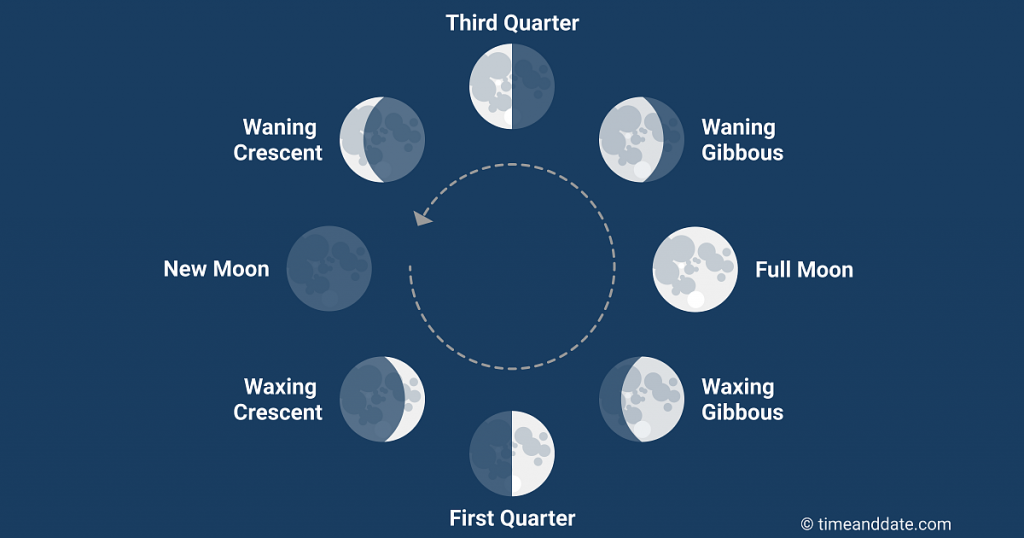
The lunar calendar divides the year into months, each corresponding to a complete cycle of the moon’s eight phases: new moon, waxing crescent, first quarter, waxing gibbous, full moon, waning gibbous, third quarter, and waning crescent. A full lunar cycle spans approximately 29.5 days, reflecting the duration of a lunar month. Since the period of 12 such lunations, a lunar year contains 354 days, which is 11 to 12 days shorter than the solar year.
2. DISCLOSE THE SECRET OF THE MOON - A GUIDING LIGHT
Throughout history, people have looked up on the skies seeking meaning, order, and a way to measure time. In this quest, early societies turned to the moon as their celestial guide.
The use of lunar calendars can be traced back to prehistoric times, with the discovery of lunar calendars in caves in France and Germany dating back to the late Palaeolithic era, around 32,000 years before Christ, according to NASA. The Maya, Celts, and Incas, among others, incorporated the moon’s rhythm into their daily lives, recognizing its connection to fertility, rainfall, birth, and death.
(Source: Internet)
3. THE LUNAR CALENDAR IN THE TAPESTRY OF TIME
(Source: Internet)
The lunar calendar was used by the ancient Greeks, Romans, and Chinese, among others, as a practical planning guide for agricultural activities. The reason is that based on the rotation of the Moon, villagers can predict the change of season and changes in nature, ensuring optimal conditions for crop cultivation. To be specific, moon gravitation force extends its reach to lakes, the atmosphere, and even the Earth’s crust, demonstrating the moon’s profound influence on the planet’s dynamics.
As society advances, people gradually transition from using the Lunar Calendar to a more convenient and stable option, the Solar Calendar. However, some communities still use the lunar calendar along with the solar calendar. As it persists as an integral aspect of our shared human heritage, with religious or cultural meaning.
4. UNREPLACEABLE IN OUR TRADITION
(Source: Internet)
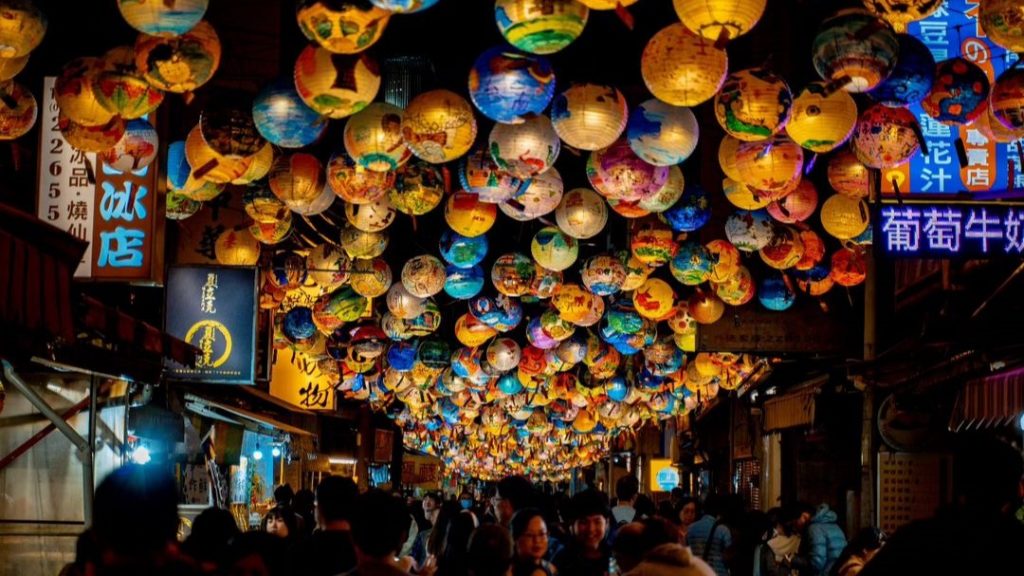
As a country with an agricultural tradition spanning over 3000 years, China adheres to the lunar calendar as a cultural heritage. Therefore, many significant celebrations such as Lunar New Year, Mid-Autumn Festival, Lantern Festival and others are based on the lunar cycle, carrying profound traditional significance that cannot be easily replaced.
While the historical and cultural connections with China have left a lasting impact on various aspects of Vietnamese life, Vietnam has developed its own distinct cultural identity, such as celebrating “Tet” instead of Chinese New Year. The similarities in traditions and customs highlight the rich tapestry of cultural exchange between these two neighboring nations.
(Source: Internet)
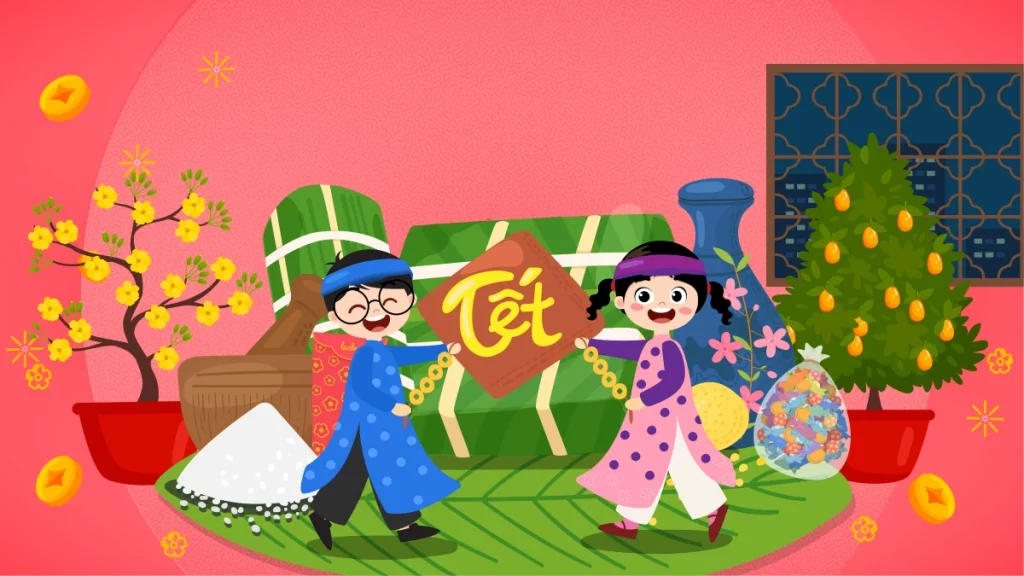
Tet can be said to be tied to agricultural rhythms guided by lunar phases, symbolizing a time of renewal and anticipation for a bountiful harvest. However, after transitioning through different historical periods, the meaning of Tet has changed over time to be more suitable for modern lifestyles. Today, people recognize Tet as an occasion for gathering and gratitude. No matter what, this festival still plays a significant role in people’s hearts, reflecting a rich culture that people always want to preserve.
(Source: Internet)
All in all, the use of the moon as a calendar has been an important part of human history and culture for thousands of years. While the use of the moon as a calendar may not be as common as it once was, it remains an important part of our collective human heritage and continues to be celebrated and observed by many around the world.
With nearly 30 years of experience in English education in Vietnam, VUS has grown its network to 73 campuses and more than 2,700 qualified teaching staff nationwide.
VUS is proud to be recognized with two awards at the Vietnam Technology Excellence Awards 2025, honored as an Inspirational Brand at APEA for two consecutive years, and acknowledged through various national and international awards.
When joining VUS, teachers and teaching assistants enjoy a wide range of practical benefits that support long-term growth and commitment:
Stable income: Steady and fair rewards for your efforts, allowing you to focus on teaching and growth.
Ongoing professional training: Structured onboarding with entrance workshops and continuous support via sharing sessions and the Training Hub, led by Teaching Quality Managers holding master’s or doctoral degrees and extensive teaching experience.
Modern, international-standard facilities: Diverse teaching tools, updated materials, and well equipped classrooms for a professional working environment.
Engaging internal events: Activities that create opportunities to relax, connect with colleagues, and recharge your energy.
Supportive colleagues: Work with a team that is always ready to share, support, and grow together.
Clear career advancement: A transparent career path with many opportunities to challenge yourself and grow into higher roles.
VUS offers a professional workplace where you can strengthen your skills, grow your career, and inspire young learners across Vietnam:
– Expatriate Teachers: Experience teaching in Vietnam with international standards, integration support, and career development opportunities.
– Vietnamese Teachers: Continuously sharpen your expertise while helping students reach out to the world.
– Teaching Assistants: The first step to explore the teaching profession and gain valuable real-life classroom experience.