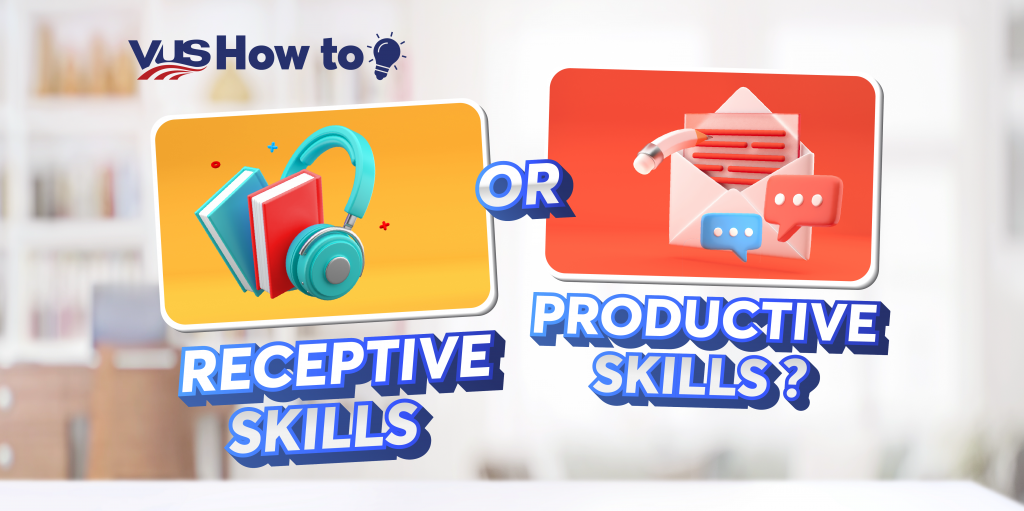
Using a one-size-fits-all teaching approach for all four skills?
Shake your teaching game with our supercharged tips!
Language learning involves a combination of various skills that enable effective communication. Two fundamental categories of language skills are receptive skills and productive skills. There are many different ways to approach these two categories, and many different activities that may or may not be appropriate for the skill that you’re teaching.
Table of Contents
Decode the Language Mystery: Meet Receptive vs. Productive Skills!
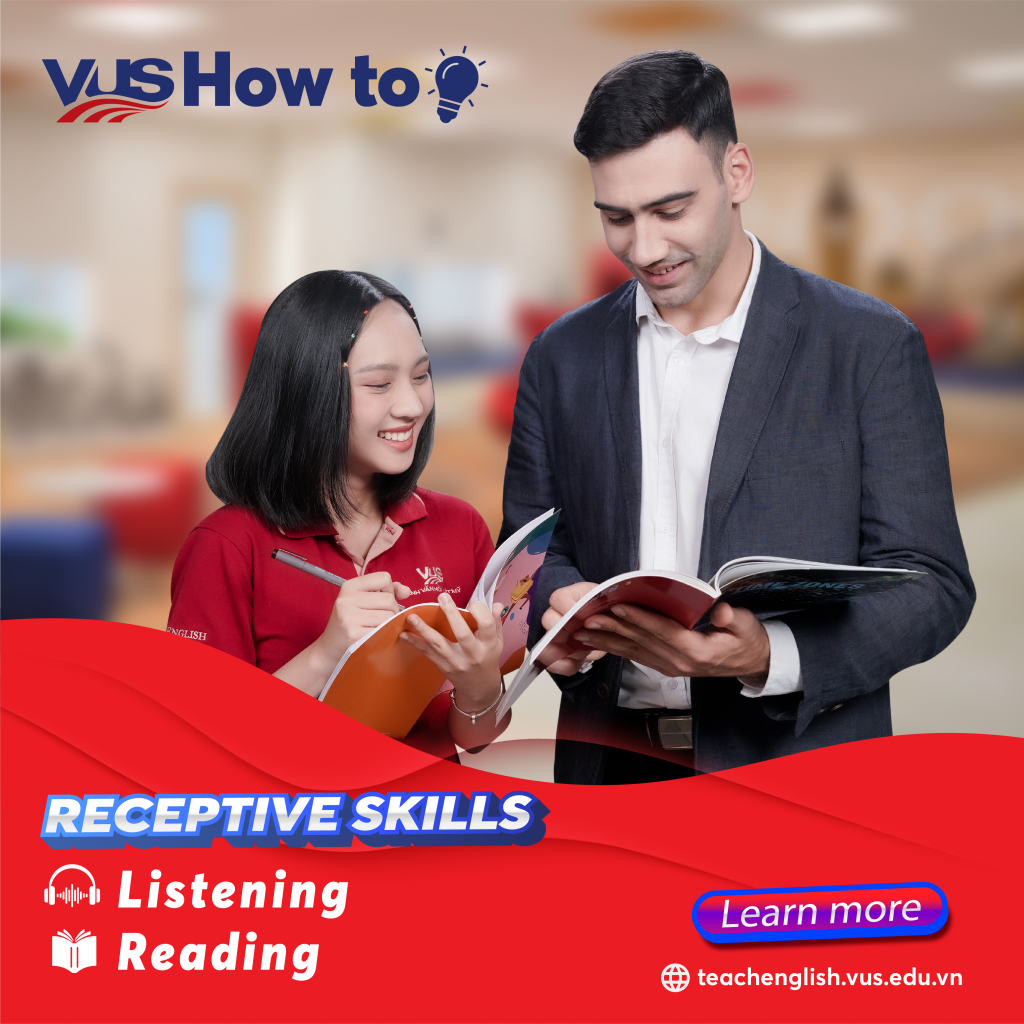
Receptive skills refer to the ability to understand and interpret spoken or written language. There are two primary receptive skills: listening and reading.
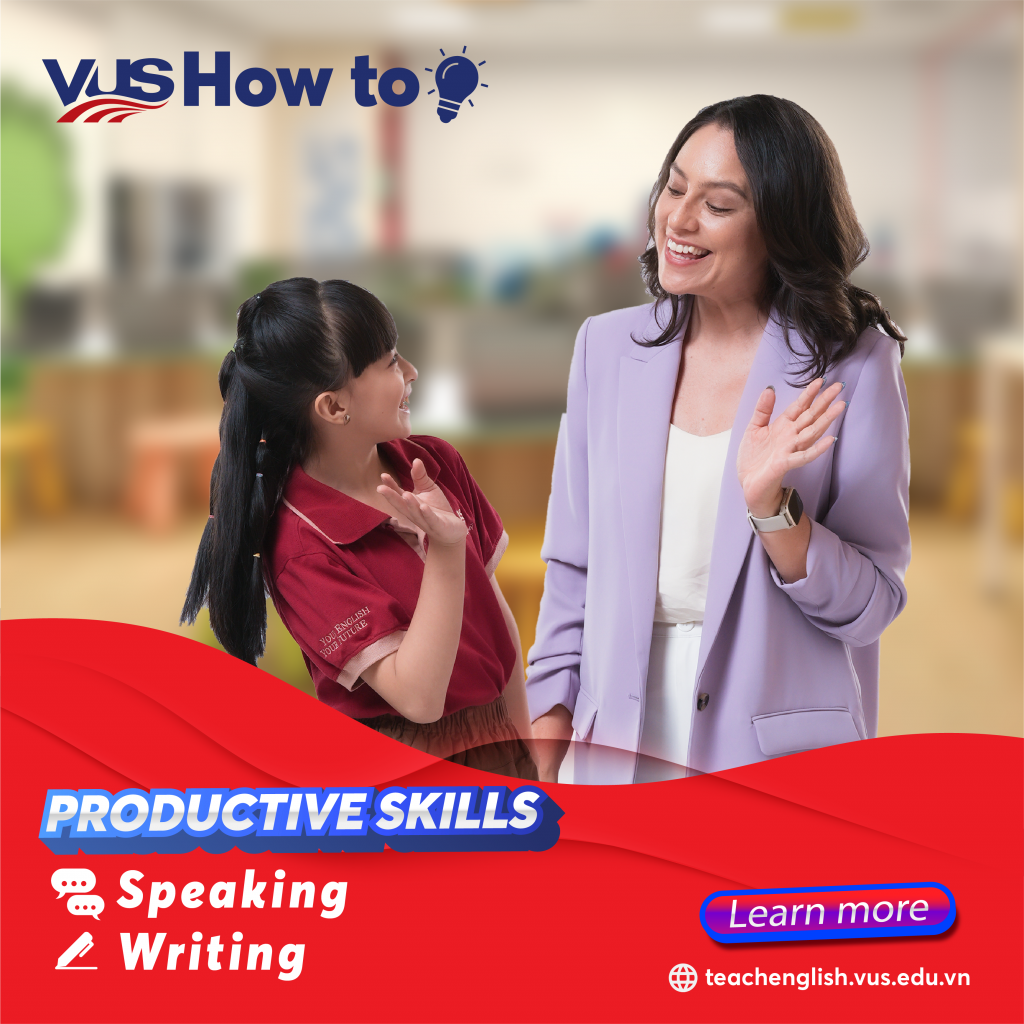
Productive skills involve expressing oneself using language. These skills focus on generating spoken or written content. There are two main productive skills: speaking and writing.
All of your lessons will focus on one or a combination of these four skills. Oftentimes a textbook unit will start with a lesson about one of the four skills and build upon its use in the following lessons.
Grammar & Vocab: The Dynamic Duo of Language Learning and Where They Belong!
Grammar and vocabulary don’t fall into the 4 big categories. Instead, these are considered micro skills and are a part of all aspects of learning language. A new grammatical structure or new vocabulary will be introduced to students, and the lesson will show them how to use it when speaking, and then identify it in a reading passage or audio recording.
Discover All About Teaching Receptive Skills with This Exciting Series!
This Teaching Tips series will focus on helping you teach the receptive skill of Reading. Reading is the skill of understanding written language and is crucial for comprehending books, articles, and other written materials. Teaching receptive language skills like reading requires a thoughtful approach that engages learners and helps them comprehend and interpret written language effectively.

Your Guide to the Receptive Skills Framework!
One common approach to teaching reading is to use the “Pre-While-Post” teaching framework. “Pre-While-Post” helps structure lessons effectively by dividing them into three distinct phases: the pre-teaching phase, the while-teaching phase, and the post-teaching phase. This approach aims to engage learners, facilitate understanding, and reinforce knowledge acquisition.
Next up in the latter parts of the series, we will go through the pre, while and post-reading phases of teaching reading. Click on the tabs below to learn more about how to successfully deliver receptive skills lessons!
ENHANCING READING COMPREHENSION: THE POWER OF PRE-READING ACTIVITIES

Ready to tackle those epic reads in class? Worried about time? Fear no more! Pre-reading to the rescue!
Now that we have covered the basic concepts of teaching reading in the 1st part of the Receptive Skills Teaching Tips series, it is time to discover the power of pre-reading activities.
When you see a long text in your upcoming reading lesson, you might be tempted to jump straight into the text to have enough time to get through it all. However, this could set you up for failure as you struggle with difficult vocabulary, unfamiliar topics and a lack of interest from your students.

If you spend a few minutes on a pre-reading activity or game, your students will be primed and ready to tackle even the most difficult passages! Get your gears turning with these tips.
I. Don’t jump straight into reading! Take some time to explore the topic first!
Pre-reading is important because it helps activate students’ prior knowledge, connecting what they already know with the new information. This allows students to make meaningful associations and enhances their understanding of the text, making it easier to understand. Pre-reading also makes students curious and interested in the topic, which makes them more motivated to read. Overall, pre-reading helps students feel more comfortable, curious, and ready to learn from the reading material.
II. Use some warm-up games or activities that are related to the reading
Pre-reading activities give the students a way to connect the new material with what they already know. You can use activities that focus on the topic in general, or that help students think about and predict what might happen in the text. This can be an opportunity to practice reading skills before they dive into the text, which will make the actual reading much smoother.
For older students, pre-reading activities can also be used to introduce various reading strategies, such as making inferences. These strategies are then applied during the reading phase, improving overall reading skills.
III. Pre-reading can be fun with these activities!
Depending on your lesson, your pre-reading activity could be something fun and on-topic, or it could be more academic but still interesting to the students. Your main goal is to guide the students away from their daily distractions and bring their attention to your reading subject.
Here are some suggestions for pre-reading activities:
Pre-reading activities will save you a lot of stress and time in the long run, as you learn to adapt your new skills to a variety of different reading lessons. Your students will be more confident in their reading skills as well!
ENGAGING READING STRATEGIES AND ACTIVITIES FOR ACTIVE LEARNING
Getting through a reading lesson can take longer than you expect, especially as unanticipated problems come up in class. You might be tempted to jam through the whole thing in one go, just to get it wrapped up so you have time to answer questions afterwards.
However, there are a lot of different techniques you can use during the while-reading phase to get your students through the lesson. This will make it easier for them to understand the text while meeting the lesson objectives. It will even save you time in the long run! Find out more in Part 3 of this Teaching Tips series, where we explore more about the while-reading phase.
I. What is the While-Reading Phase? Don’t we just read the text?
During the while-reading phase, learners engage directly with the text itself, actively extracting information, understanding content, and making connections. This phase aims to deepen comprehension, encourage critical thinking, and promote active engagement with the material.
The while-reading phase can be dynamic and interactive and is more than just passively absorbing information; it requires active participation and critical thinking. Read on to learn general skills that can be used during while-reading, as well as fun activities you can use to keep students engaged and entertained.
II. Break through the ordinary teaching practices with these awesome tips!
Reading comprehension and reading out loud aren’t the only practices to teach reading! There are a variety of other techniques to help students (and you!) get through reading exercises with ease.
Here are some suggestions for activities to try in class.
III. Are your students falling asleep while reading? Hype up the atmosphere with these suggestions!
You can make the reading more engaging by turning the text into a fun activity. This promotes active reading and can increase student engagement with the text.
Here are some suggestions for different activities:
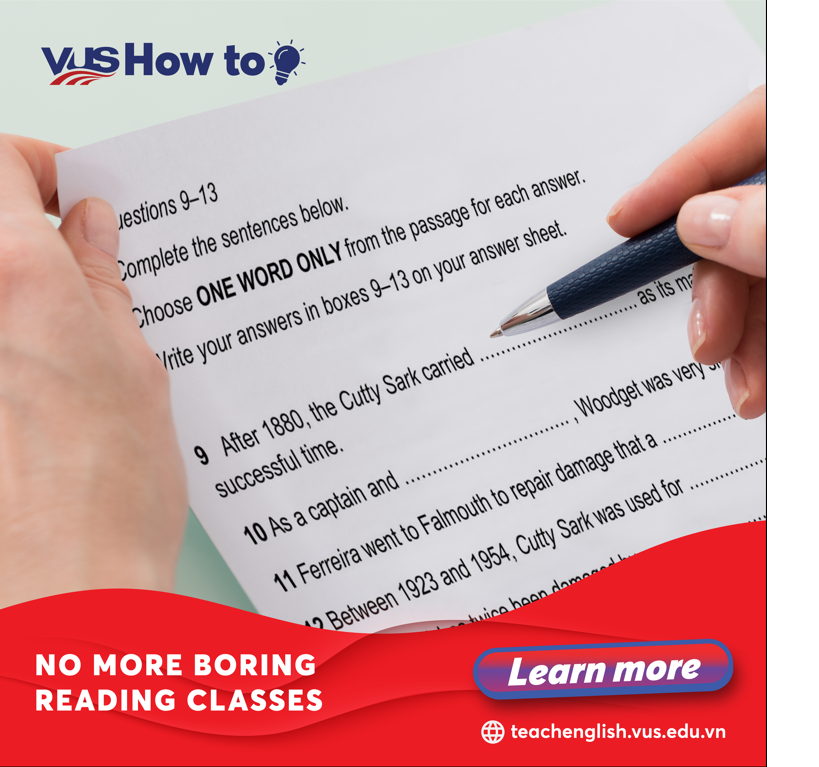
FINISHED READING? CLOSE YOUR BOOKS AND GO HOME! NOT! HERE ARE 3 SKILLS TO DEVELOP WITH YOUR STUDENTS IN THE POST-READING PHASE.
You’ve just finished getting through the text in class, now what? This is the post-reading phase, and is a great opportunity to help your students consolidate their understanding, reflect on the text, and apply their newly-gained knowledge to their lives in a practical way.
I. What is the Post-Reading Phase? Can’t we move on to something else?
The post-reading phase focuses on reinforcing and assessing what students have learned during the reading activity. This phase helps consolidate their understanding and provides opportunities for reflection. It is your opportunity to ask some comprehension questions, conduct speaking or writing activities and make sure your students took in the main objectives of the lesson.
Take this opportunity to help develop some learning skills. Don’t worry, you can have fun now, too!
- Application: Assign tasks or exercises that require students to apply what they’ve learned to solve problems or complete real-world scenarios.
- Reflection: Encourage students to reflect on what they’ve learned, how it connects to their prior knowledge, and how they can use it in different contexts.
II. Skills to develop during the post-reading phase, and how to make it fun!

Summarization
helps reinforce students’ comprehension skills. By using their own words, students can more easily process the material. One straightforward way to do this is to ask students to write a concise summary of the main ideas of the text. However, this could get boring quickly!
Here are some ways to make it more fun:
- Challenge them to summarize the text in a limited number of words, such as a tweet or a headline.
- Have them create visual representations of key scenes from the text using drawings, collages, or digital tools.
- One enjoyable way to summarize with younger learners is to give them a blank comic strip template; they can then retell what they read using pictures and short sentences.
Reflection
encourages students to reflect on what they’ve learned, how it connects to their prior knowledge, and how they can use it in different contexts. You could:
- Have a group discussion where students share their thoughts, impressions, and insights from the text, and see if they can relate it to personal experiences or real-world events.
- Your advanced students can discuss any changes in their perspectives after reading.
- You can ask younger learners questions about whether they like what they read or not, and more importantly, why.


Communication
skills can also be developed during the post-reading phase. Some activities to do this include:
- Engage students in discussions or presentations where they express their understanding of the material, supporting their points with evidence from the text.
- Young students might enjoy pretending they are characters from the reading, roleplaying situations similar to what they just read.
- Teens or university students could be assigned to take different positions on a controversial topic from the text and engage in a debate. Your cheeky students might love the opportunity to play the devil’s advocate!
III. The Last Page
We hope that our Receptive Skills: Reading series has been helpful for you, with both your lesson planning and your in-class teaching time! As you can see, there is so much more to a reading task than just having your students grind through the text and answer a few questions. Having a fun activity afterwards can encourage students to look forward to reading assignments! It’s also a great opportunity to explore your students’ interests and relate their lives to something new and exciting.
With nearly 30 years of experience in English education in Vietnam, VUS has grown its network to 73 campuses and more than 2,700 qualified teaching staff nationwide.
VUS is proud to be recognized with two awards at the Vietnam Technology Excellence Awards 2025, honored as an Inspirational Brand at APEA for two consecutive years, and acknowledged through various national and international awards.
VUS offers an exciting opportunity for expatriate teachers to grow professionally while discovering the beauty of life and culture in Vietnam. With strong support and international standards, your journey here is more than just teaching — it’s about learning, connecting, and thriving.
- Competitive salary: Rewards that match your talent and contribution.
- Professional growth: Enhance your teaching skills with ongoing training and development.
- Cultural immersion: Experience daily life in Vietnam and build meaningful local connections.
- International-standard environment: Teach with modern facilities, updated resources, and proven methodologies.
- Full integration support: Assistance with administrative paperwork and a dedicated Buddy Program to help you adapt to local culture, especially at provincial campuses.
- Free Vietnamese classes: free for all VUS expat teachers (even during probation), taught by qualified Vietnamese teachers with proven expertise, and built on a tailored curriculum that meets expats’ daily needs.
Start your teaching journey with VUS today!